Cement and Concrete in the Ancient World
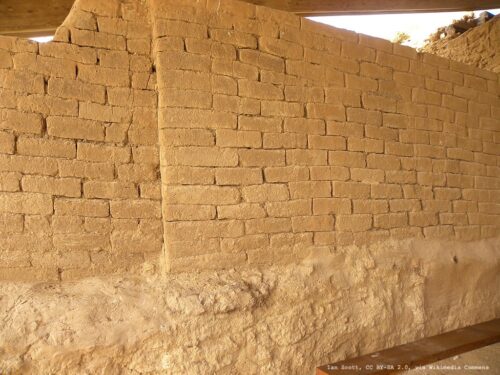
Before the widespread use of cement and concrete in large-scale construction in the Ancient World, the traditional building materials in the Middle East were mud blocks and clay, dried either in the sun or in kilns and placed one on top of the other to build a wall.
Early Cement and Plaster
Thousands of years ago, ancient builders discovered that when limestone or chalk was burned in ovens and mixed with water, it formed a white paste. This paste could then be used as insulating plaster and cement. It was applied to mud building blocks and acted as an adhesive.
When exposed to the open air, the white paste dried and formed a tough artificial stone, which gave strength and stability to the block wall.
This early chalk-based cement greatly strengthened the walls, but the amount of weight the walls could support was limited. The structures could be built of two or three floors, but not much more than that.
Roman Breakthrough
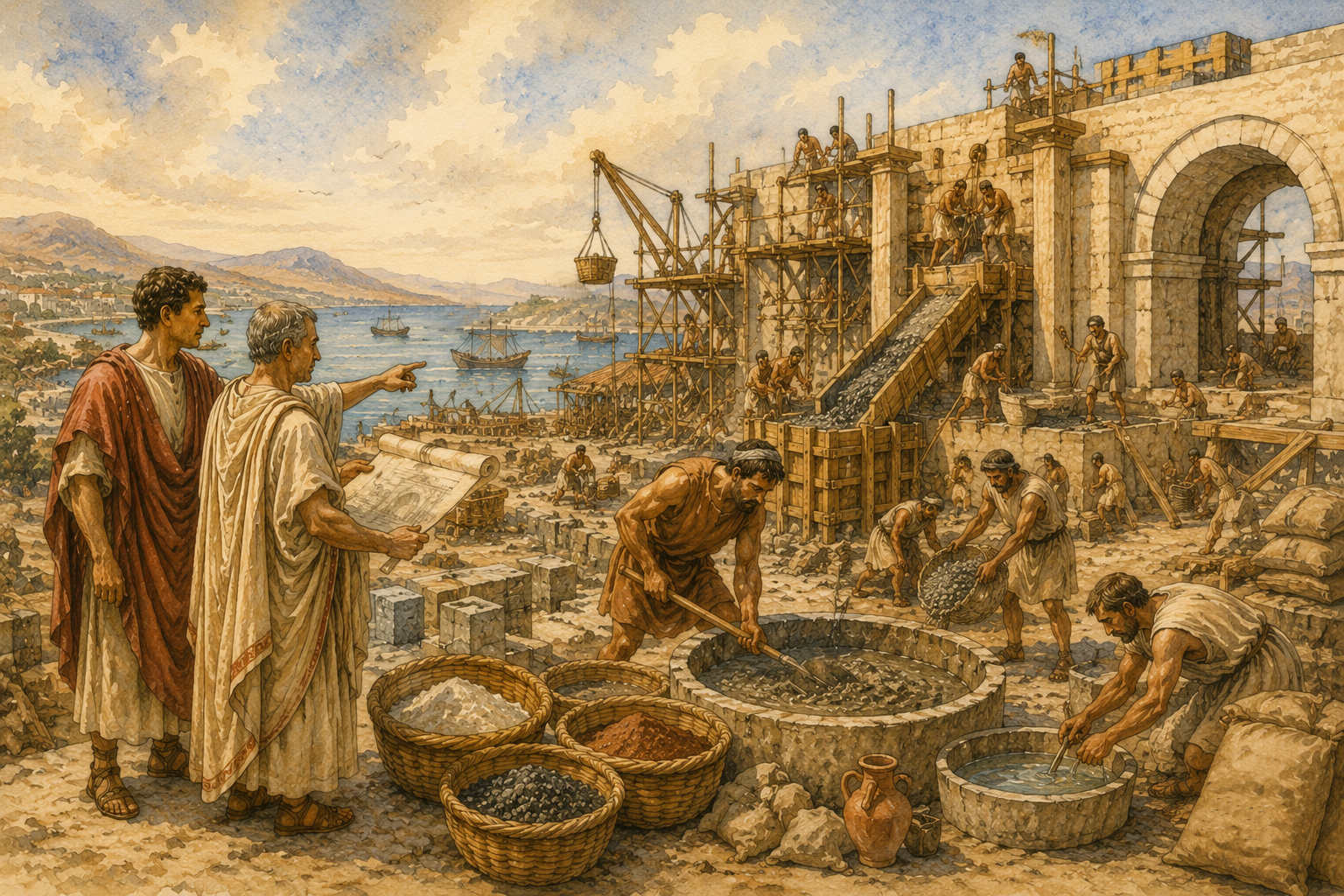
A significant breakthrough in Roman construction technology occurred during the Roman Republic, particularly from around the 3rd century BC onward. Roman builders discovered that adding volcanic ashes to the chalk cement formed an artificial stone much stronger than anything they had seen before. They mixed this lighter, porous form of cement with sand and volcanic tuff rock.
The result was concrete.
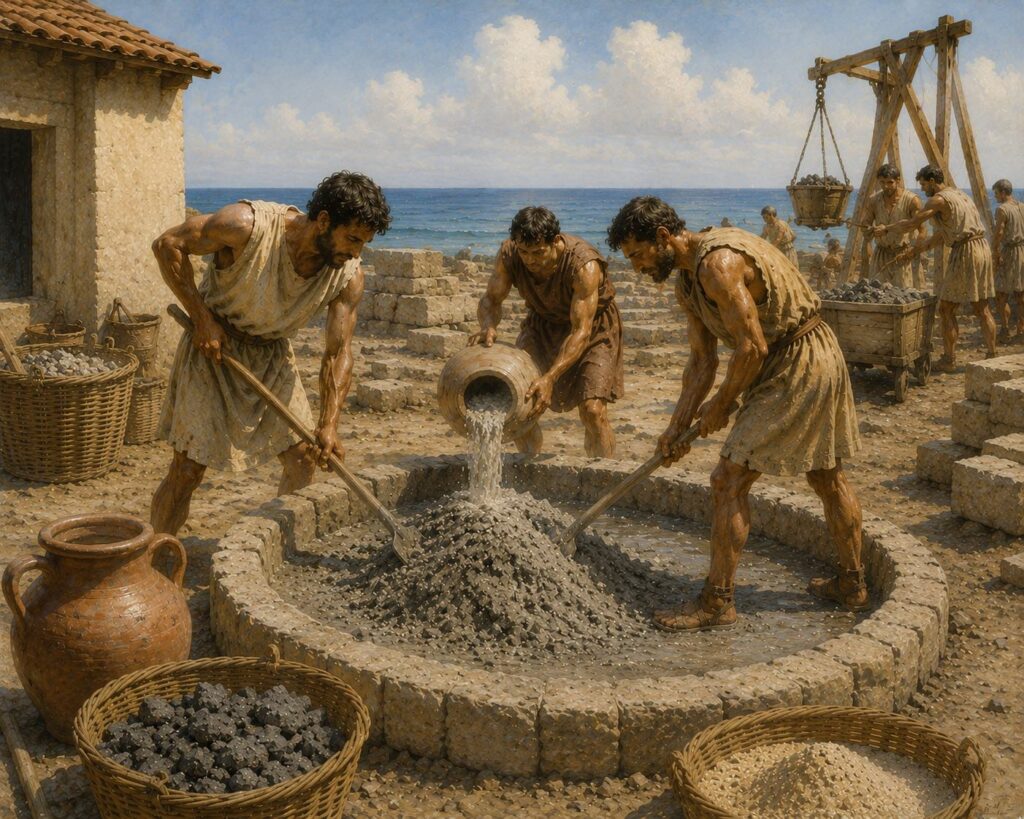
The invention of concrete brought about a dramatic transformation in Roman architecture. The great strength of concrete walls and columns allowed Roman engineers and architects to dare to dream of bigger structures and monuments than ever before.
They could now build thinner concrete walls, which allowed engineers to design structures with larger and more impressive spaces.
For hundreds of years, Roman builders improved upon the technique of concrete construction, until around the year 27 BC, during the early years of the reign of Caesar Augustus, when it reached an extraordinary level of refinement.
The Perfection of Roman Concrete
The Romans discovered that a specific type of volcanic ash, called Pozzolana, named after the region around the Roman town of Puteoli (modern Pozzuoli) where large deposits were found, could be used to form the strongest and most durable cement they had yet encountered.
In addition, the concrete formed from this particular type of volcanic ash had another very important quality: it was capable of drying and hardening even when exposed to water. This discovery allowed Roman engineers to build bigger and more sophisticated harbors than ever before.
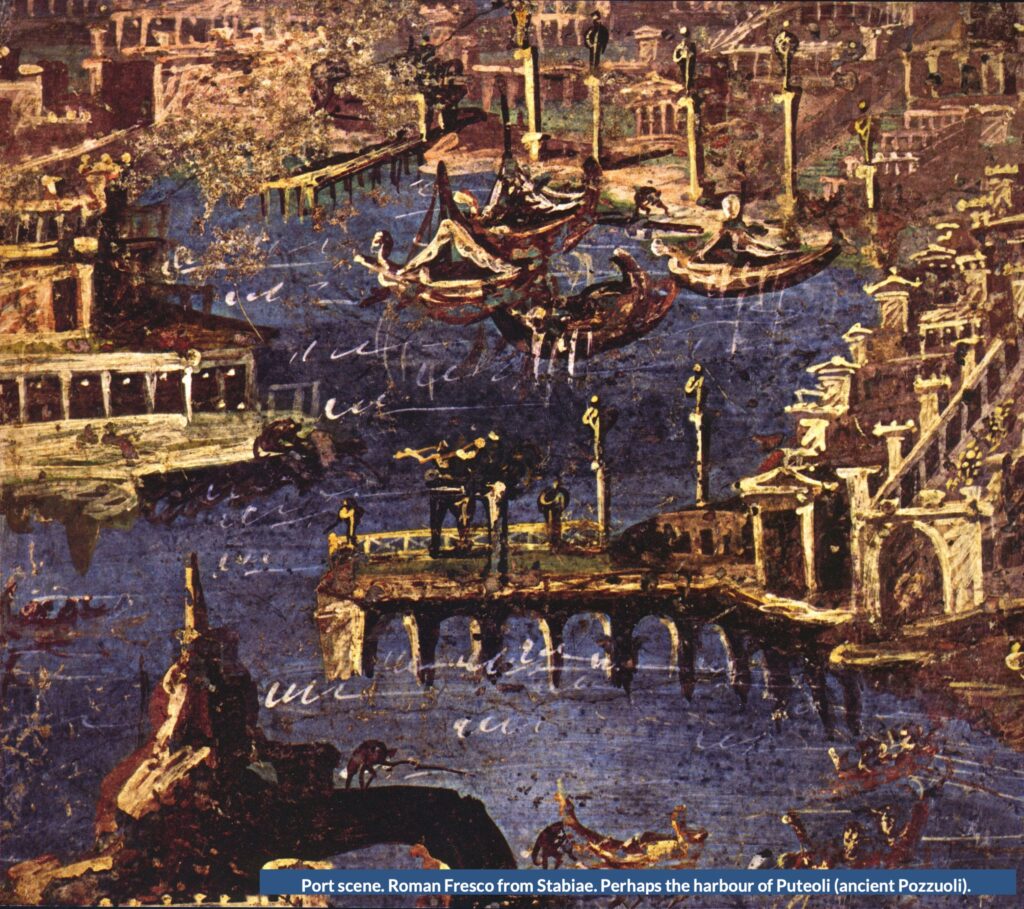
Soon after, the use of Pozzolana became widely adopted in all the major projects of Roman architecture.
Loss of Knowledge
With the fall of the Roman Empire, much of the knowledge required for large-scale concrete construction was gradually lost. As long as the Roman Empire existed, the engineering knowledge was preserved, and the recipe for making concrete was passed down between builders from one generation to another.
When the Roman Empire crumbled around the late 5th century AD, its economy crumbled as well, and no one had enough money to fund the construction of huge, magnificent structures like those of the Colosseum and the Pantheon.
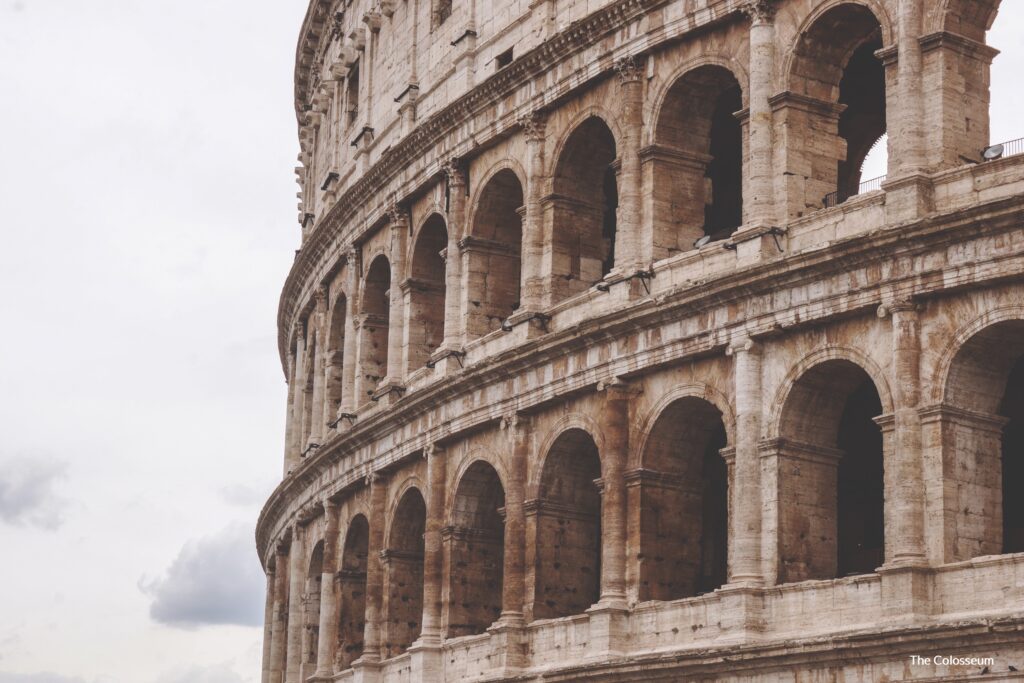
Smaller structures could be built from bricks and simple chalk cement, leading to a decrease in the use of concrete. Additionally, the transportation of thousands of tons of volcanic ash was extremely costly.
As concrete construction declined, much of the specialized knowledge surrounding Roman concrete gradually disappeared.
Rediscovery
The architects of the Medieval Period stood in astonishment before the architectural masterpieces built by their ancient predecessors. Unfortunately, they no longer understood the methods required to recreate them.
Only toward the end of the 18th century and into the modern industrial era was concrete technology seriously rediscovered and redeveloped in Europe and the United States, almost 1500 years after the fall of the Roman Empire.