Agunah (Chained Wife)
The Meaning of Agunah
The word Agunah (עגונה) comes from the Hebrew word ogen (עוגן), meaning “anchor”. An Agunah is therefore understood as a “chained” or “anchored” woman – someone unable to move forward and rebuild her life.
In Jewish tradition, an Agunah is a married woman who cannot receive a divorce or legal release from her marriage. This may occur because her husband has disappeared, is missing, or is unable to grant a divorce due to physical or mental incapacity.
The term Agunah itself does not appear in the Hebrew Bible, although its root appears in the Book of Ruth:
“Would you wait for them till they were grown? Would you restrain yourselves from having husbands?”
Ruth 1:13
Although the word itself belongs to later Jewish tradition, the Scriptures do describe women left without husbands and without the ability to establish a new household or family.
David’s Concubines
One example appears after the rebellion of Absalom against his father, King David.
When David fled Jerusalem during the rebellion, he left ten concubines behind to care for the palace. After his return, David placed them in seclusion and no longer lived with them as wives, yet they remained forbidden to other men.
“When David returned to his palace in Jerusalem, he took the ten concubines he had left to take care of the palace and put them in a house under guard. He provided for them but had no sexual relations with them. They were kept in confinement till the day of their death, living as widows.”
2 Samuel 20:3
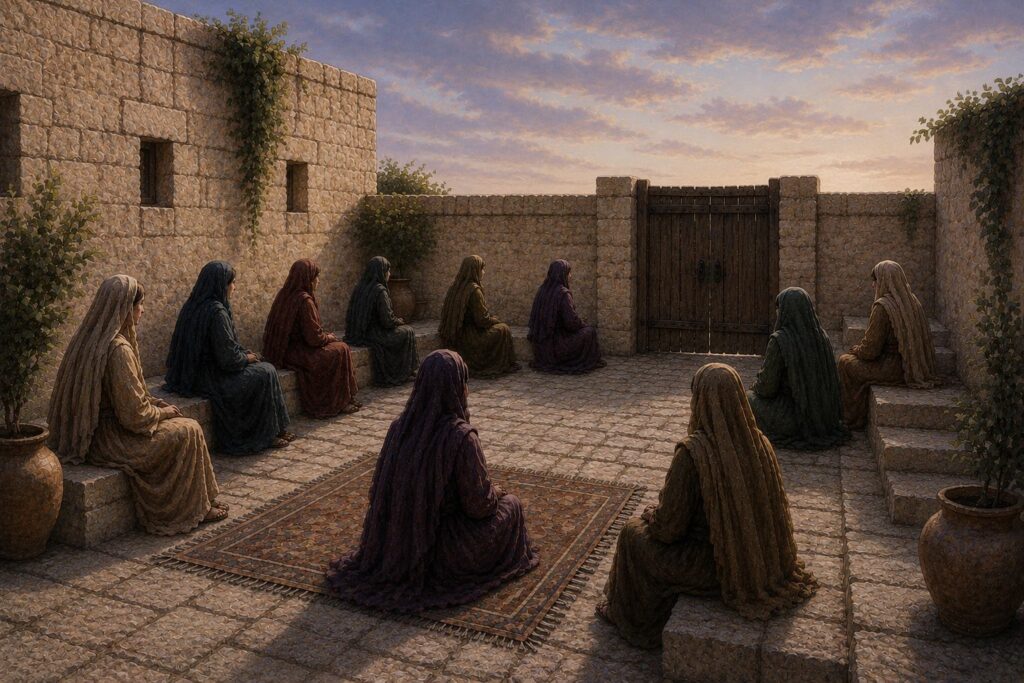
These women existed in a state similar to later descriptions of Agunah – neither fully married nor free to begin a new life elsewhere.
Naomi and the Law of Yibbum
A second example appears in the Book of Ruth.
After the deaths of her husband and sons, Naomi urged her daughters-in-law, Ruth and Orpah, not to remain bound to the hope of future husbands through Yibbum, asking whether they would “restrain themselves from having husbands” while waiting for sons who had not yet been born. Naomi understood that such a wait could leave them unable to remarry for many years, if at all.
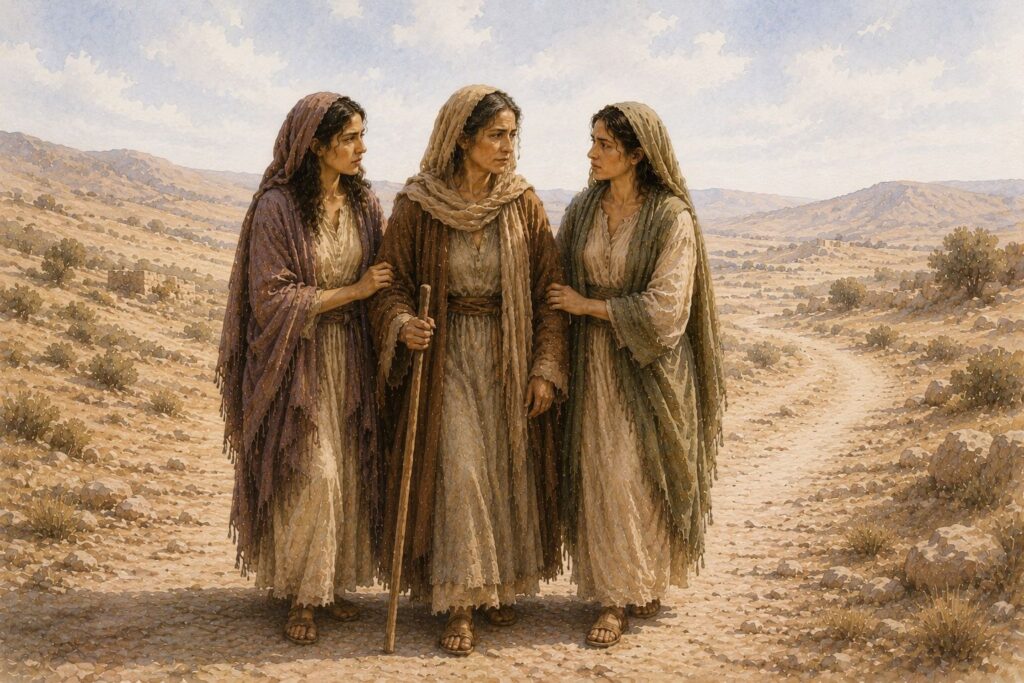
Her words reflected the difficult reality faced by widows in the ancient world, especially those still bound by family obligation and unable to establish a new household.
Judah and Tamar
One of the clearest biblical examples connected to the idea of Agunah appears in the story of Judah and Tamar in Genesis 38.
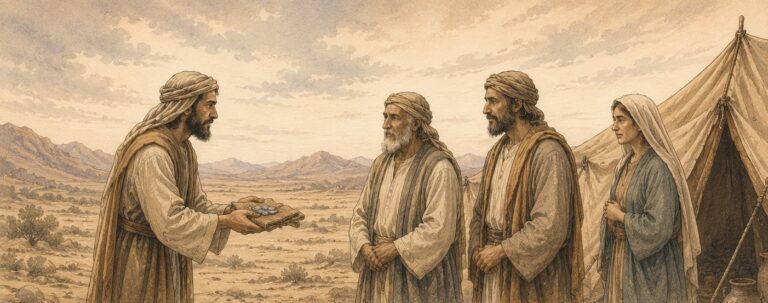
Judah, the son of Jacob and Leah, married the daughter of a Canaanite man named Shua. In the biblical text, Judah’s wife herself is never named, and is simply referred to as “the daughter of Shua.” They had three sons: Er, Onan, and Shelah.
Tamar became the wife of Er, Judah’s firstborn. After Er died without children, Tamar remained tied to Judah’s household through the obligation of Yibbum.
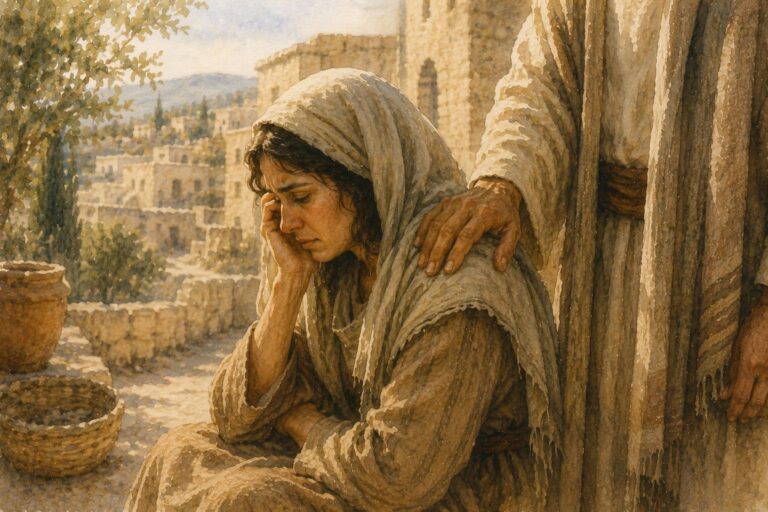
As a childless widow, she could not simply leave and establish a new family elsewhere. In the tribal society of the ancient world, a woman’s security and future were deeply connected to the household she belonged to and to the possibility of bearing children who would continue the family line. Without children, Tamar’s position within the household became increasingly fragile, as childless widows in the ancient world often lacked both status and protection.
Judah instructed his second son, Onan, to fulfil the duty of Yibbum by raising offspring in the name of his deceased brother.
“And Judah said to Onan, ‘Go in to your brother’s wife and marry her, and raise up an heir to your brother.'”
Genesis 38:8
Yet Onan refused to carry out the responsibility fully, and the Lord judged him for it.
After Onan’s death, the obligation should eventually have passed to the third son, Shelah. However, Shelah was still too young to marry, so Judah sent Tamar back to her father’s household until the boy became older.
“Then Judah said to Tamar his daughter-in-law, ‘Remain a widow in your father’s house till my son Shelah is grown.'”
Genesis 38:11
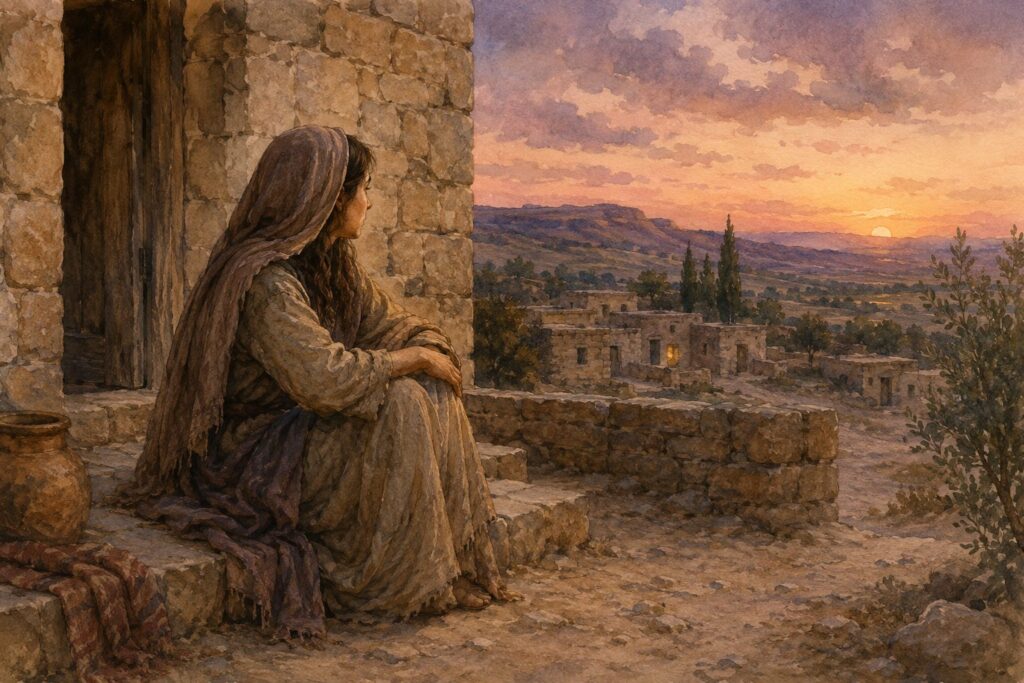
Tamar therefore remained in a state of uncertainty – neither fully released nor fully restored within the family. Although Judah promised that Shelah would eventually marry Tamar, the promise was never fulfilled.
“For she saw that Shelah was grown, and she was not given to him as a wife.”
Genesis 38:14
Over time, Tamar realised that she had effectively become trapped: unable to marry elsewhere, yet still bound to Judah’s household through obligation and expectation.
Unlike a widow living within her husband’s tribal household, Tamar now lived back in her father’s home in Timna. This distance also limited the ability of Judah’s local elders to intervene directly in her situation.
Although the formal legal category of Agunah developed later within Jewish tradition, the biblical narratives already reflect the difficult realities faced by women left suspended between widowhood, marriage obligations, and the survival of the family line. These stories preserve a glimpse into the social vulnerabilities of women in the tribal world of ancient Israel.