Leah and Rachel
Rivalry Between Sisters
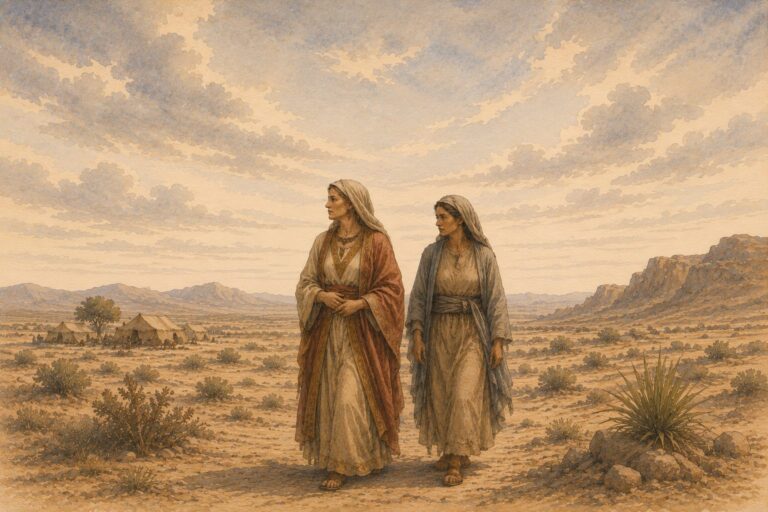
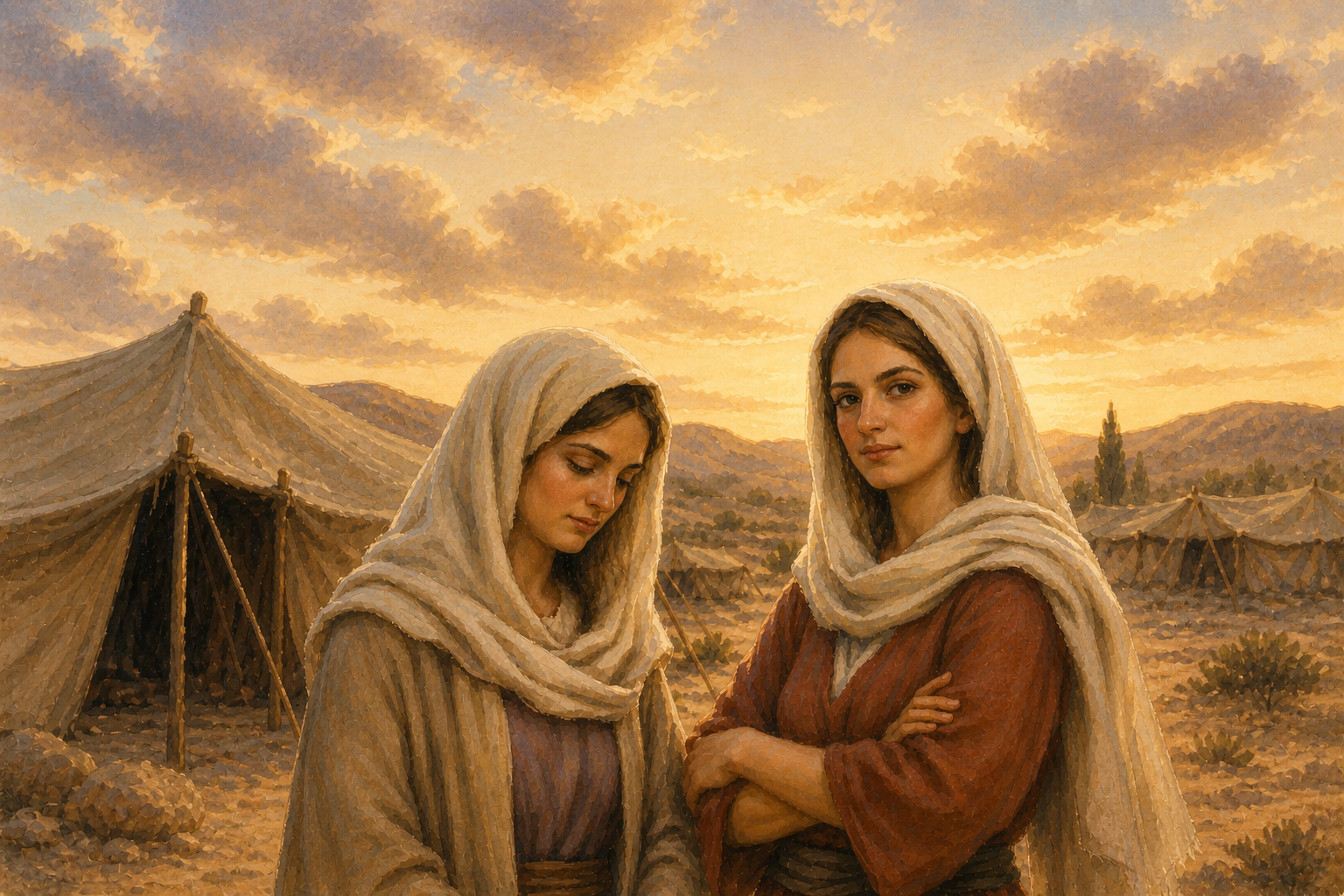
Rachel and Leah were in constant tension with one another, each striving for her place within the household.
Their rivalry was shaped by love, status, and the desire for children.
The text presents Jacob as showing clear favoritism toward Rachel, which likely shaped his relationship with Leah. His lack of affection toward Leah is emphasized:
“When the Lord saw that Leah was unloved, He opened her womb”
Genesis 29:31
This imbalance created deep emotional strain within the household. In the ancient world, a wife’s position was often dependent on her husband’s favor, and this naturally shaped the relationship between the two sisters.
Love, Rejection, and Status
Jacob had been deceived into marrying Leah, and the text suggests that this affected his relationship with her. While his inner thoughts are not fully described, his preference for Rachel is clear.
In that cultural context, the husband held significant authority within the household, and a woman’s experience of marriage was closely tied to her husband’s attitude toward her.
It is therefore understandable that Leah would feel pain and insecurity, while Rachel, who was loved, held a more desired position, at least at the beginning.
The Struggle for Children
In this world, the deepest struggle was not only to be unloved, but also barren.
When Rachel saw that she bore Jacob no children, her anguish became clear:
“Now when Rachel saw that she bore Jacob no children, Rachel envied her sister, and said to Jacob, ‘Give me children, or else I die!'”
Genesis 30:1
Rachel’s longing for children led to deep envy toward her sister. At the same time, Leah’s ability to bear sons gradually elevated her status within the household.
The tension between the sisters was not only emotional, but also tied to inheritance, legacy, and position within the family.
The Mohar that was effectively given for Leah came at Rachel’s expense, as Rachel would likely have been expected to hold the position of senior wife.
When wives held different statuses within the household, birth order was not the determining factor for inheritance or prominence. This can be seen in the case of Isaac and Ishmael.
However, when multiple wives shared equal status, birth order became significant.
Leah’s Journey Through Her Sons
The twelve sons of Jacob can be seen as reflecting different stages in the lives of Leah and Rachel. Through the naming of the children, the text reveals their inner struggles, hopes, and changing positions within the household. Leah named her own sons as well as the sons born through her maidservant Zilpah, as they were considered to be hers. In the same way, Rachel named both her sons and those born through her maidservant Bilhah.
Reuben
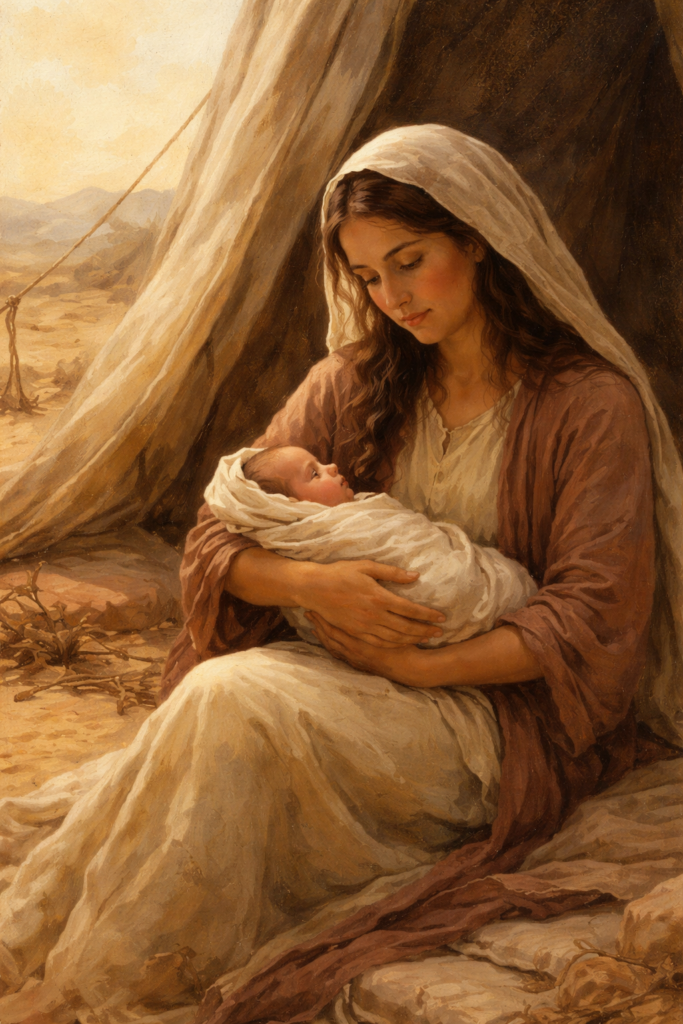
Leah’s story begins with her firstborn, Reuben, whose name captures her early struggles and the feelings of being unloved.
“So Leah conceived and bore a son, and she called him Reuben; for she said, ‘The Lord has surely looked on my affliction…'”
Genesis 29:32
In Hebrew, the words “The Lord has surely looked on my affliction”, are written as רָאָ֤ה יְהֹוָה֙ בְּעׇנְיִ֔י (ra’ah adonai b’ani).
The word עֳנִי can mean deep suffering or distress. In the cultural and historical context, Leah’s words express extreme humiliation and anguish. She used this expression to convey the profound emotional pain she experienced, as a woman living within in a marriage she did not fully choose.
Simeon
Leah’s second son, Simeon, continues to reflect her sense of being unloved and overlooked.
“…Because the Lord has heard that I am unloved…”
Genesis 29:33
Here, Leah again emphasizes her sense of isolation and lack of affection. The language shows her awareness of her difficult position within the household.
Levi
With the birth of her third son, Levi, we see Leah using words which reflect hope and a shift in her emotional state.
“Now this time my husband will become attached to me, because I have borne him three sons”
Genesis 29:34
Her naming of Levi expresses anticipation that her growing family will bring recognition and attachment from Jacob.
Judah
“And she conceived again and bore a son, and said, ‘Now I will praise the Lord.’ Therefore she called his name Judah…”
Genesis 29:35
Judah’s name (connected to the Hebrew idea of praise and thanksgiving; הודיה, Hodaya) signals Leah’s growing gratitude and recognition of her children as a blessing, indicating her emotional transition toward contentment and acknowledgment of God’s role in her life.
Gad
The birth of Gad demonstrates Leah’s relief and recognition of her fortunes.
“…Then Leah said, ‘What good fortune!’ So she named him Gad.”
genesis 30:11
In Hebrew, Gad relates to luck or fortune, expressing Leah’s relief and growing happiness, showing her awareness that her position in the household is improving.
Asher
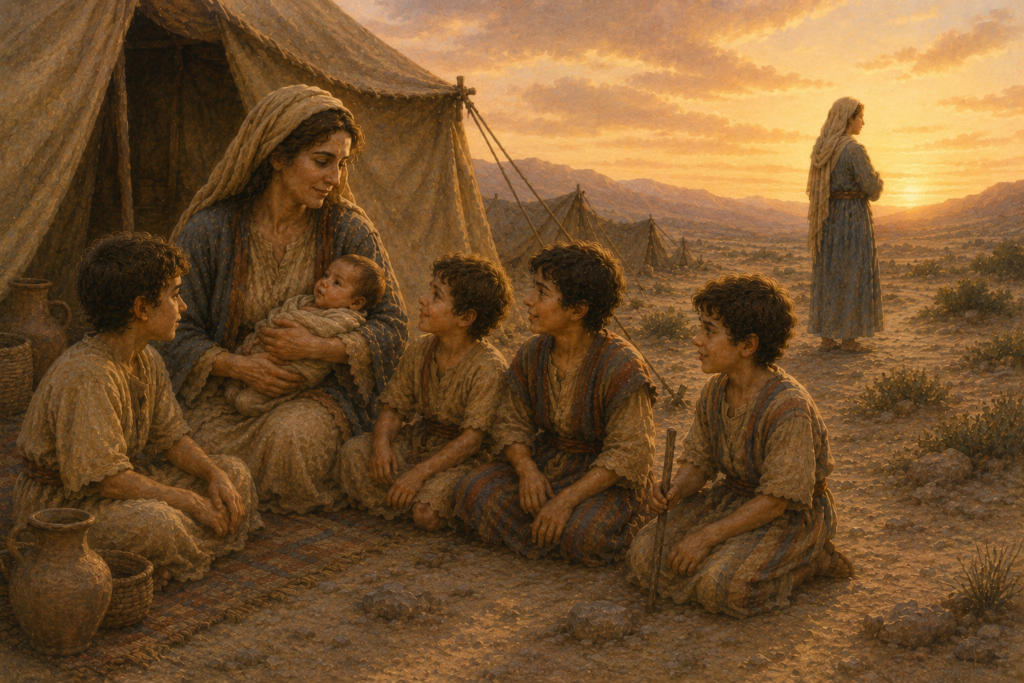
“Then Leah said, ‘I am happy, for the daughters will call me blessed.’ So she called his name Asher.”
Genesis 30:13
Leah’s sixth son, Asher, emphasizes joy and social recognition.
The Hebrew word אושר (Osher) translates as happiness, showing Leah’s evolving emotional state and acceptance of her household role.
Issachar
Issachar reflects Leah’s sense of fairness and acknowledgment of her contributions.
“Leah said, ‘God has given me my wages, because I have given my maid to my husband.’ So she called his name Issachar.”
genesis 30:18
With the naming of Issachar, we see a change in nuance. For the first time, Leah refers to Jacob explicitly as her husband, signaling a shift in her relationship with him and a growing sense of personal recognition within the household.
Zebulun
“And Leah said, ‘God has endowed me with a good endowment; now my husband will dwell with me, because I have borne him six sons.’ So she called his name Zebulun.”
Genesis 30:20
The Hebrew word זבד (zeved) is often translated as “endowment”, but in Biblical Hebrew a more accurate meaning would be “big gift” or “fat offering”. Leah’s choice of words reflects her sense that she has been generously blessed and recognized within the household, and that Jacob should honor her as a valued wife.
Dinah
“And she conceived and bore a daughter, and called her name Dinah.”
Genesis 30:21
Leah’s daughter Dinah marks the culmination of her childbearing journey. Through her children, including Dinah, Leah commemorates her early hardships and later blessings, reflecting her increasing influence and status in the household.
Rachel’s Struggle and Response
Rachel watched as her sister gained status through childbirth, while she remained without children. This tormented her, and she grew increasingly envious of her sister and felt that life was unbearable.
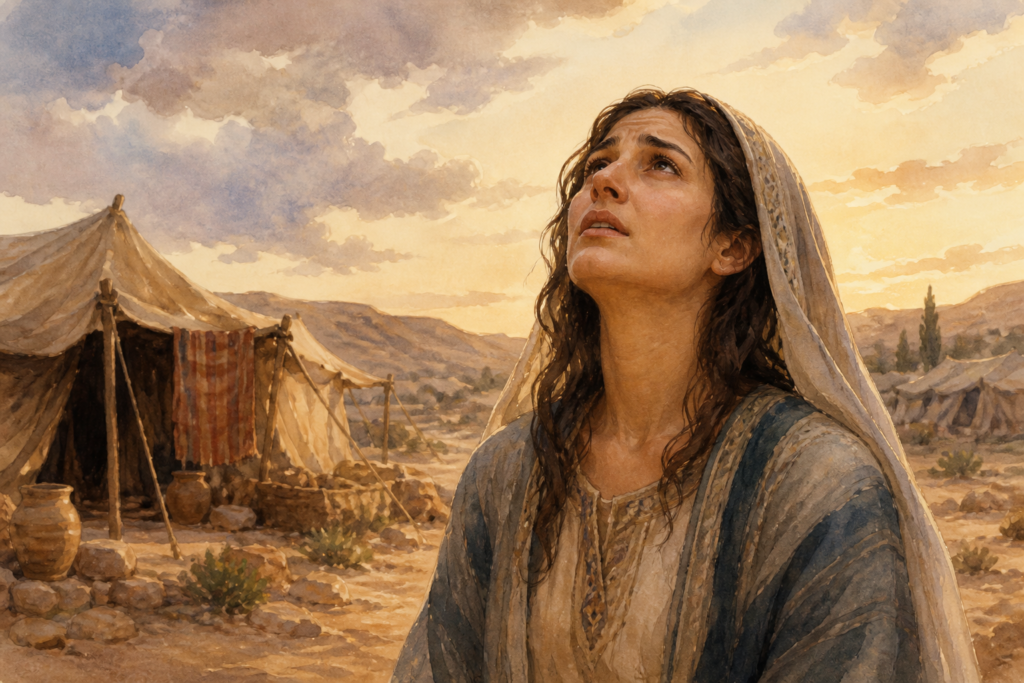
“Now when Rachel saw that she bore Jacob no children, Rachel envied her sister, and said to Jacob, ‘Give me children, or else I die!'”
Genesis 30:1
Jacob’s response reflects both tension and frustration:
“And Jacob’s anger was aroused against Rachel, and he said, ‘Am I in the place of God, who has withheld from you the fruit of the womb?'”
Genesis 30:2
In her desperation, Rachel gave her maidservant Bilhah to Jacob, so that she might bear children on her behalf. Bilhah provided Rachel with two sons.
Dan
With the birth of her first son, Dan, Rachel feels vindicated.
“Then Rachel said, ‘God has judged my case; and He has also heard my voice and given me a son.’ Therefore she called his name Dan…”
Genesis 30:6
Dan’s name reflects Rachel’s perception that God has recognized her struggles and granted her justice, giving her a sense of vindication.
Naphtali
“And Rachel’s maid Bilhah conceived again and bore Jacob a second son. Then Rachel said, ‘With great wrestlings I have wrestled with my sister, and indeed I have prevailed.’ So she called his name Naphtali.”
Genesis 30:7-8
The struggle Rachel refers to here is the ongoing competition with her sister for status within the household.
Naphtali’s name conveys Rachel’s ongoing competition with Leah and her desire to overcome the obstacles in the household hierarchy.
Some time later, after the birth of Leah’s final child, Rachel finally gave birth to her own biological sons.
Joseph
“…And she conceived and bore a son, and said, ‘God has taken away my reproach.’ So she called his name Joseph, and said, ‘The Lord shall add to me another son.'”
Genesis 30:23-24
With Joseph, Rachel expresses hope and longing for more children. The name Yosef (יוסף) means “to add” – Rachel’s words reflect relief and aspiration for a more secure place in Jacob’s family, asking the Lord for an additional son.
Benjamin
Finally, Rachel’s last son, Benjamin, is born during a tragic childbirth.
“And so it was, as her soul was departing (for she died), that she called his name Ben-Oni; but his father called him Benjamin.”
genesis 35:18
During Rachel’s labor, something went wrong, leading to her untimely death. Before her passing, she gave her son the name Ben-Oni, a name carrying deep sorrow.
The Hebrew word בן (ben) means “son”, while אוני (oni) can be understood in several ways – such as “my strength”, or alternatively as suffering, grief, or death. In this context, it reflects Rachel’s final moments, and may be understood as “son of my sorrow” or even “the cause of my death”.
Jacob later changed his son’s name to Benjamin (Binyamin).
This name can be broken down as:
- Ben (בן) = son
- Yamin (ימין) = right
In the ancient world, orientation was often imagined facing east. In that framework, the right sign corresponded to the south and the left to the north.
All of Jacob’s sons were born in the north, outside the Land. Benjamin was the only son born within the Land itself, to the south of his brothers’ birthplace. In this sense, his name may also be understood as “son of the south”.
His name carries both a revealed meaning and a deeper, hidden one – transforming a moment of sorrow into one of identity and place.
A Reversal of Status
Through the names of the sons, another layer of the story is revealed.
Leah, the unloved wife, gradually found stability, fruitfulness, and even joy.
Rachel, the beloved wife, struggled through barrenness, longing, and ultimately died young.
The narrative presents a striking reversal: the one who was overlooked was lifted up, while the one who was favored endured deep hardship.
A Final Reflection
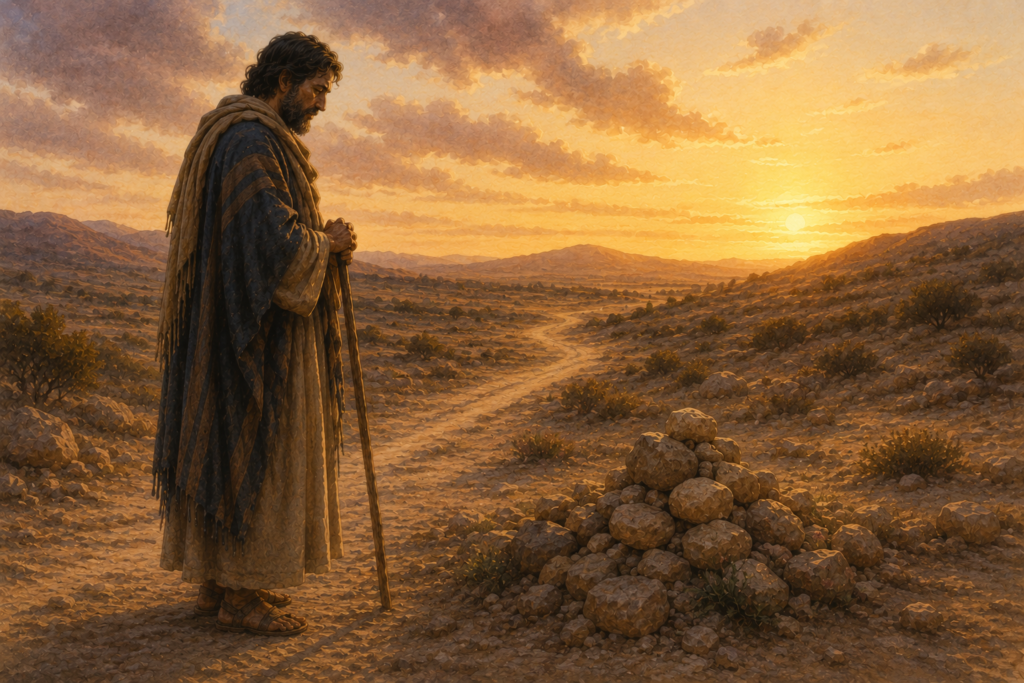
In the end, Jacob chose to be buried alongside his wife Leah in the Cave of the Patriarchs in Hebron, while Rachel was buried along the roadside, some 23 kilometers away.
Perhaps this ultimately reflects the differing roles and journeys of the two sisters within Jacob’s life and household.