Jerusalem During the Pilgrimage
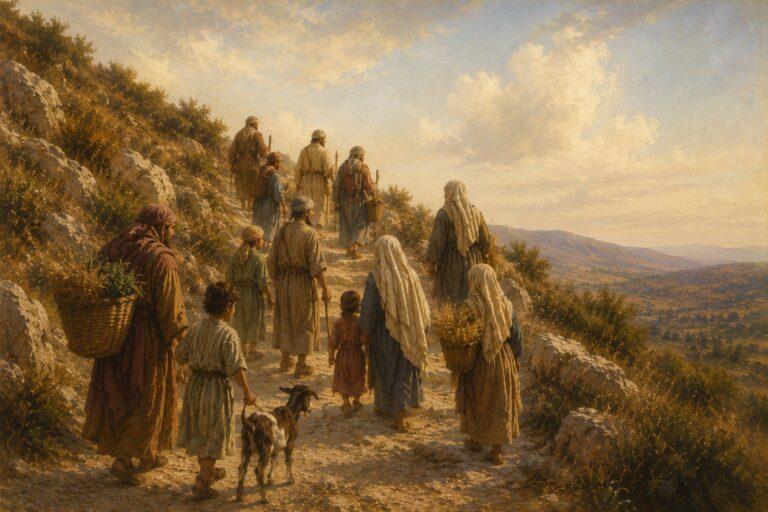
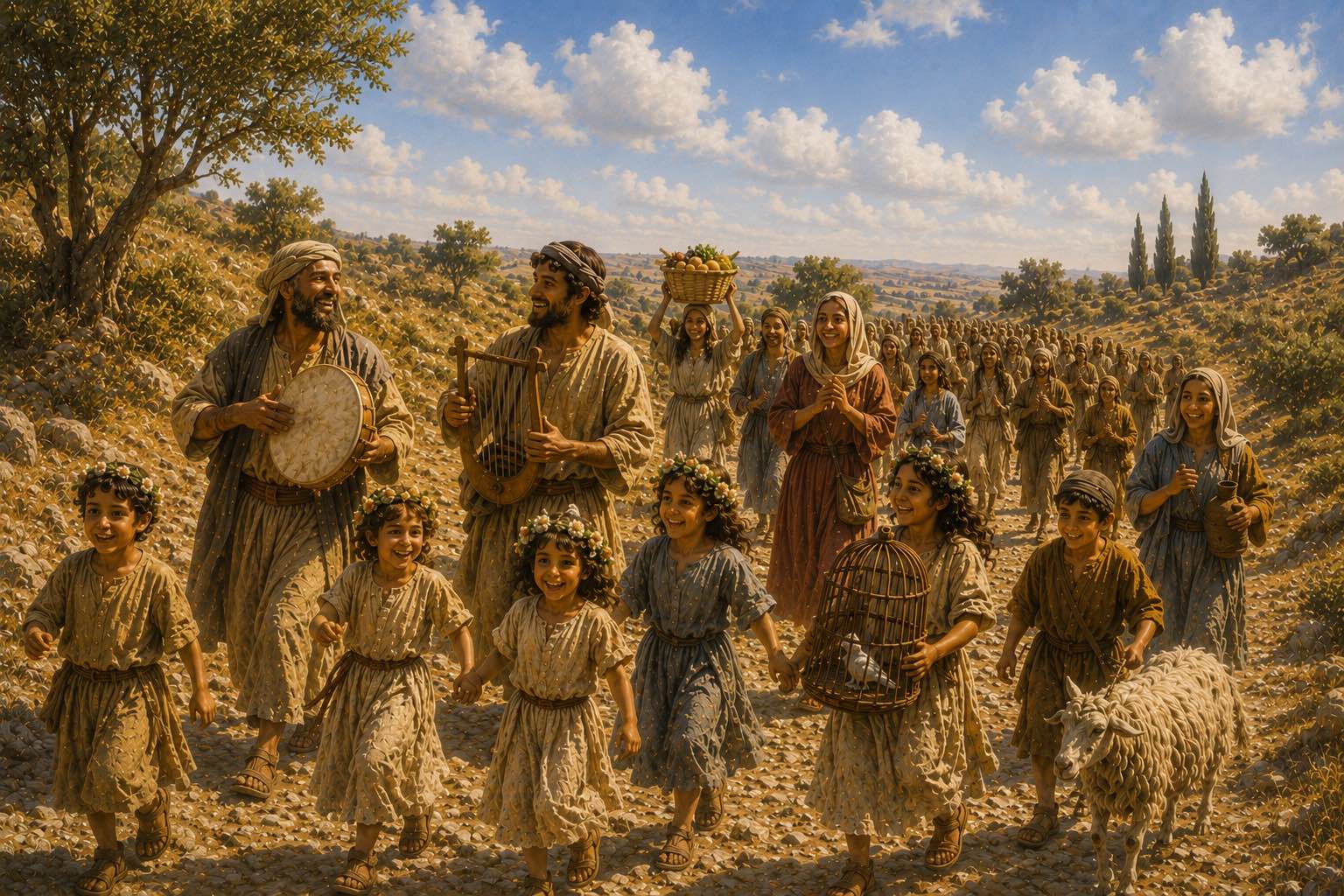
This teaching continues our exploration of the pilgrimage festivals during the Second Temple period. To learn more about the roads, preparations, and journey to Jerusalem, see: The Pilgrimage to Jerusalem
The reception that greeted the pilgrims entering Jerusalem was itself a national ceremony.
The city officials would go out to welcome the arriving pilgrims in an official delegation. According to tradition, the number of those who went out to greet them reflected the number of pilgrims arriving.
The people of Jerusalem would stop their work and rise to welcome the pilgrims.
This was not simply a touristic journey. It was a national undertaking in which the entire city participated.
Sleeping Arrangements
There appears to have existed an unwritten agreement between the residents of Jerusalem and the pilgrims. Pilgrims arriving in the city could knock on the doors of local homes and would often be offered free hospitality.
A cloth hanging at the entrance of a house signified that there was room available for guests. If no cloth was displayed, the house was already full.
In many cases, pilgrims had no idea where they would spend the night before arriving in Jerusalem. Only after entering the city would they search for lodging, often on a first-come, first-served basis.
Pilgrims could also stay in synagogue inns. If Jerusalem became overcrowded, many would stay in nearby villages such as Bethany.
The New Testament reflects this historical reality of the immense crowds within Jerusalem during the pilgrimage festivals, as well as the hospitality shown by the city’s inhabitants.
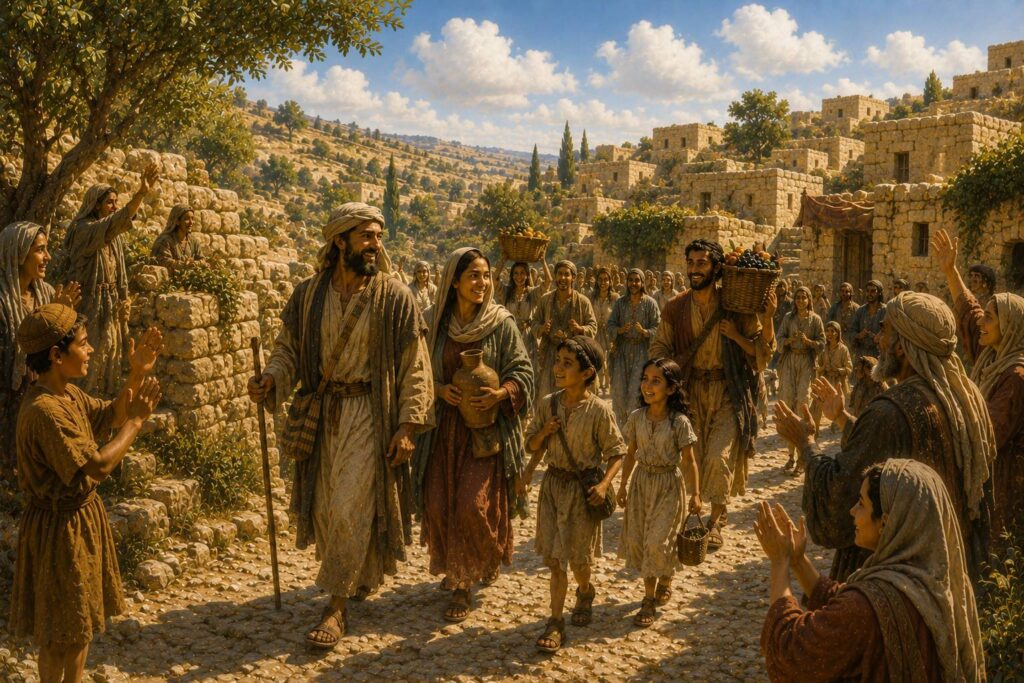
For example, when the disciples searched for a place to celebrate the Passover meal, Jesus sent them into the city, where they encountered a man who led them to a prepared upper room. This likely reflects the custom of Jerusalem’s residents preparing furnished rooms in advance for pilgrims during the High Holy Days.
“And He sent out two of His disciples and said to them, ‘Go into the city, and a man will meet you carrying a pitcher of water; follow him. Wherever he goes in, say to the master of the house, “The Teacher says, ‘Where is the guest room in which I may eat the Passover with My disciples?'” Then he will show you a large upper room, furnished and prepared; there make ready for us.’ So His disciples went out, and came into the city, and found it just as He had said to them; and they prepared the Passover.”
Mark 14:13-16
Behaviour in the Streets
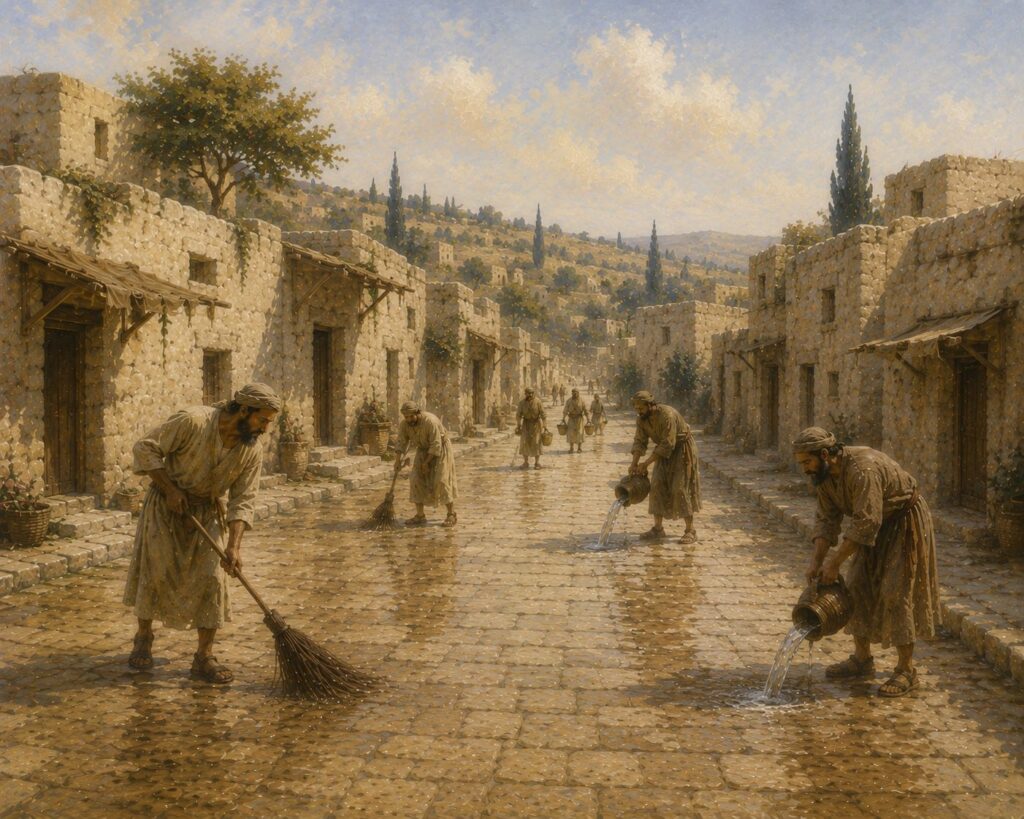
Those who were ritually impure would walk along the sides of the roads, leaving the centre clear for the pilgrims heading toward the Temple in purity.
The inhabitants of Jerusalem themselves would also clear the central pathways for the pilgrims ascending to the Temple. Most likely, many local residents avoided ascending during the busiest hours, when concerns regarding impurity became more significant.
Ancient traditions also describe informers stationed upon rooftops who reminded the crowds to maintain the separation of traffic.
The streets and marketplaces of Jerusalem were swept daily in preparation for the pilgrims.
Tithes and Donations
The pilgrimage festivals were also connected to various forms of tithes and offerings.
Great donations were brought to the priests and Levites, alongside additional tithes designated for sacred celebrations and for the poor.
The Second Tithe
During years one, two, four, and five of the seven-year agricultural cycle, pilgrims would bring ten percent of their produce to Jerusalem in order to celebrate before the Lord.
A pilgrim could sell the produce in Jerusalem and then use the money within the city. However, the money could not be used to purchase sacrificial animals.
The Tithe for the Poor
During the years three and six of the cycle, ten percent was instead given to the poor.
These systems strengthened Jerusalem both spiritually and economically.
The pilgrims contributed greatly to the city’s economy, helping sustain Jerusalem and its inhabitants throughout the year.
The pilgrimage festivals also created connections between people from distant regions. Relationships, friendships, and communal bonds were formed through these shared experiences.
Psalm 118 and the Pilgrims
Psalm 118 appears to preserve part of a ceremonial dialogue between the inhabitants of Jerusalem and the pilgrims entering the city carrying the Four Species during the Feast of Tabernacles:
“Open to me the gates of righteousness;
Psalm 118:19-26
I will go through them,
and I will praise the Lord.
This is the gate of the Lord,
through which the righteous shall enter.
I will praise You,
for You have answered me,
and have become my salvation.
The stone which the builders rejected
has become the chief cornerstone.
This was the Lord’s doing;
it is marvellous in our eyes.
This is the day that the Lord has made;
we will rejoice and be glad in it.
Save now, I pray, O Lord;
O Lord, I pray, send now prosperity.
Blessed is he who comes in the name of the Lord!
We have blessed you from the house of the Lord.”
According to tradition, the inhabitants of Jerusalem would call out:
“Lord, save us!”
The pilgrims would answer:
“Lord, grant us success!”
The citizens would then bless those entering the city and bringing their first fruits to the Temple:
“Blessed is he who comes in the name of the Lord.
From the House of the Lord we bless you.”
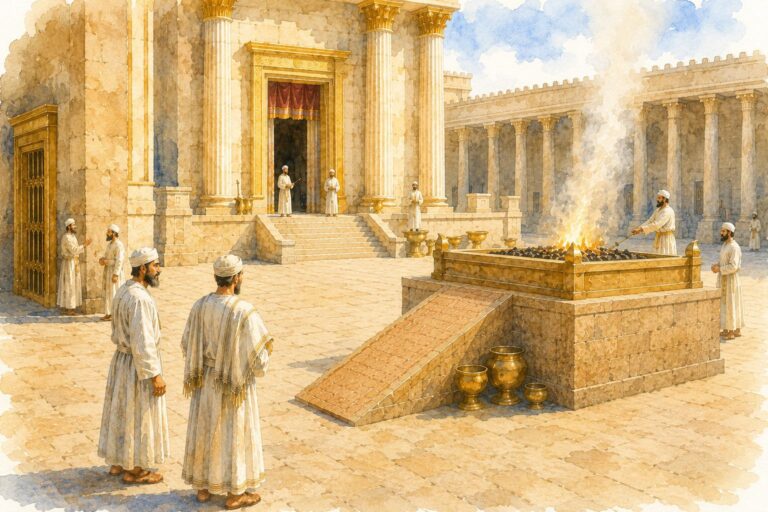
Purification Before Entering the Temple
Pilgrims entering Jerusalem would often purify themselves in the city’s great pools before ascending to the Temple.
The two principal purification sites were the Pool of Siloam and the Pool of Bethesda.
Jerusalem – A City That Draws People Together
“Jerusalem is built as a city that is compact together.”
Psalm 122:3
Jerusalem was not only a religious centre. It was a city designed to draw people together.
One example of this appears in the thanksgiving offering.
A man who wished to thank the Lord for deliverance or salvation would bring a thanksgiving offering to the Temple, publicly declaring the miracle or blessing he had experienced.
The thanksgiving offering included:
- forty loaves of bread (each loaf from at least 1 kilogram of flour)
- approximately ten litres of wine
- and ten litres of oil
All of this had to be consumed before midnight.
The practical result was that the person bringing the offering could not consume it alone. He needed companions, friends, neighbours, and guests to help share in the meal.
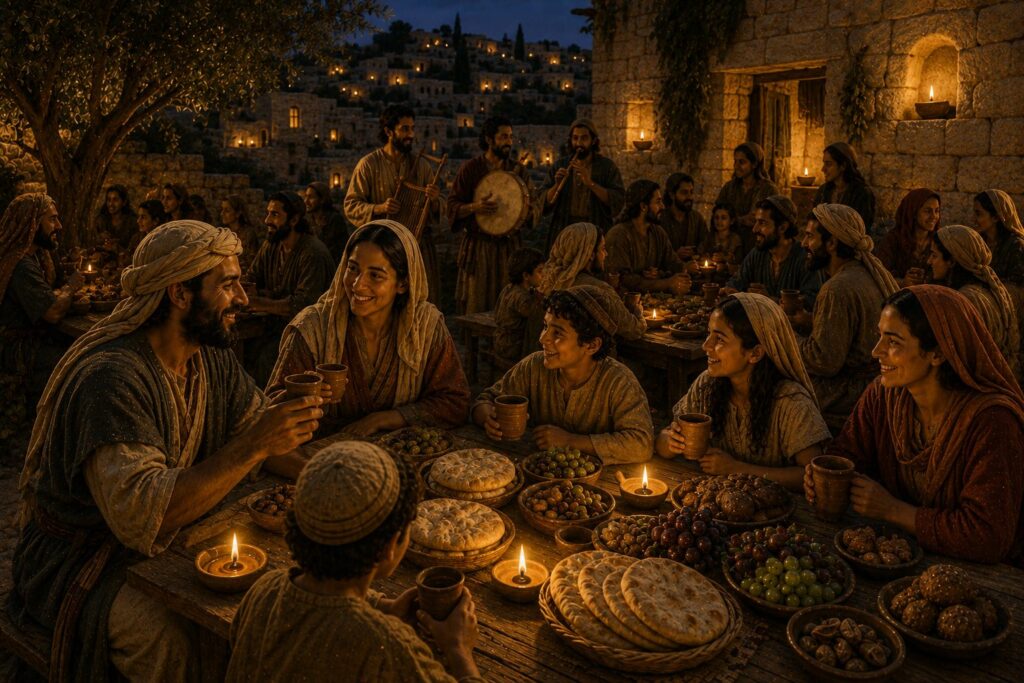
The technical requirements of the ritual themselves forced people to gather together.
Anyone wishing to give thanks to the Lord had to set a table for others.
Thanksgiving therefore became a public and communal act in which many people participated together.
Jerusalem was therefore not only a city of sacrifice, but also a city that turned strangers into companions.
It was a city of fellowship, hospitality, and connection.
The story of the pilgrimage to Jerusalem is ultimately a story of togetherness:
- a connection between parents and children,
- neighbours and strangers,
- pilgrims and residents,
- and between the people and the Lord Himself.