Herodian Oil Lamp
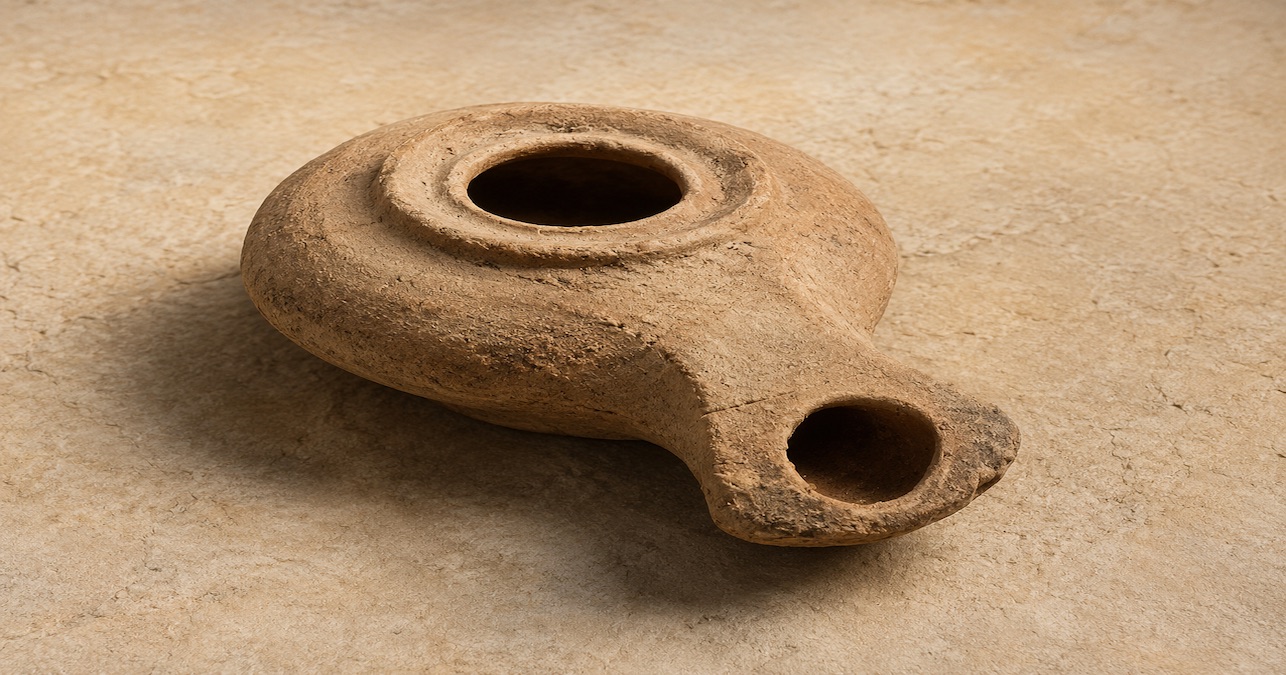
“Herodian oil lamp” is the nickname given to a very common type of oil lamp from Judea during the Second Temple period. These lamps were used from the end of the 1st century BC until the mid-2nd century AD, both in Judea and beyond.
These types of oil lamps were made in Jerusalem and have also been found in northern communities throughout the Land of Israel – in Gentile polis cities such as Beit Shean, Dor, and Geva, as well as in Jewish communities such as Tzippori (Sepphoris), Gamla, and Yodfat.
There were also those who produced these lamps locally from regional clay in both Jewish and Gentile communities in northern Israel. However, archaeological evidence – particularly the analysis of the clay – makes it quite clear that despite the distance between Jerusalem and the northern settlements, many Jews in the Galilee preferred to purchase the lamps made in Jerusalem.
It is fair to say that Galilean pilgrims during the Second Temple period likely brought Jerusalem-made oil lamps back home with them after visiting Jerusalem, either as souvenirs or for household use.

Moreover, the presence of these lamps in Jewish Galilean communities stands as testimony that Jews from these communities made pilgrimage to Jerusalem.
The Jewish connection to Jerusalem throughout the Land was very strong, and wherever Jews settled, they desired a physical connection to the Holy City as well.