Roman Roads
Roman roads were constructed primarily to serve imperial administration and military movement throughout the empire.
Unlike many earlier rural roads in the Land of Israel, Roman roads were carefully paved according to standardised measurements and engineering methods. Their construction created durable routes that could remain passable throughout the year, even during difficult weather conditions.
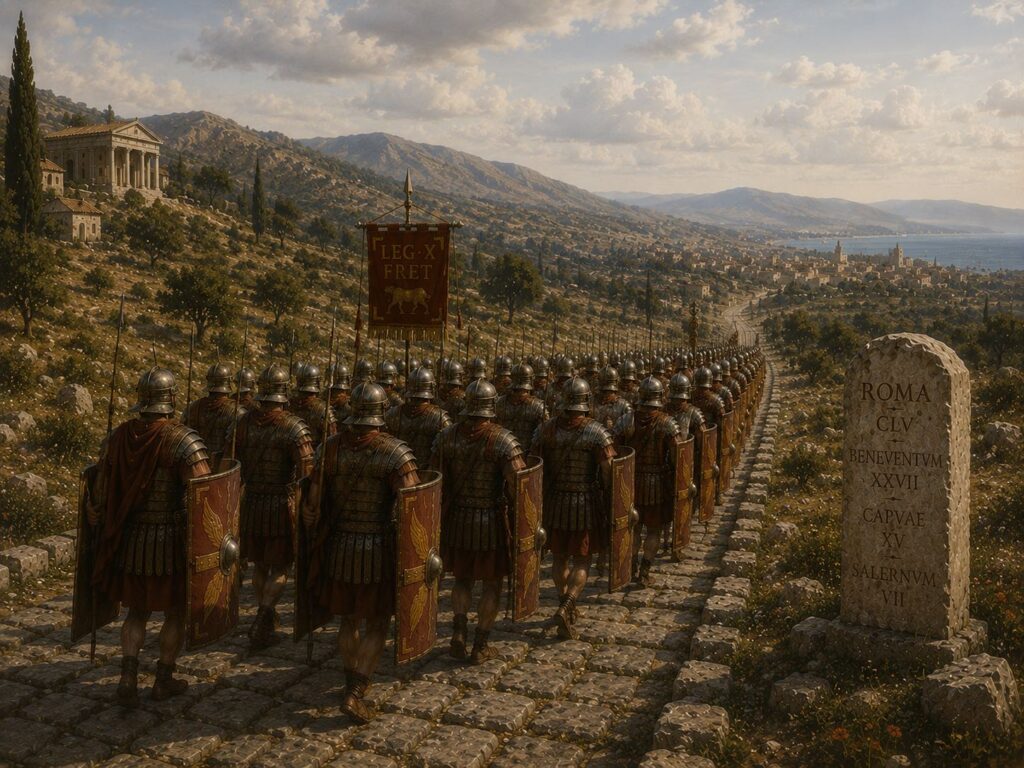
Along many Roman roads were way stations, citadels, and milestones placed at regular intervals – often every 1,472 metres. These milestones were carved in a standardised form and frequently contained inscriptions describing:
- the date of the road’s construction or renovation
- the emperor responsible for the work
- and the distance from one location to another
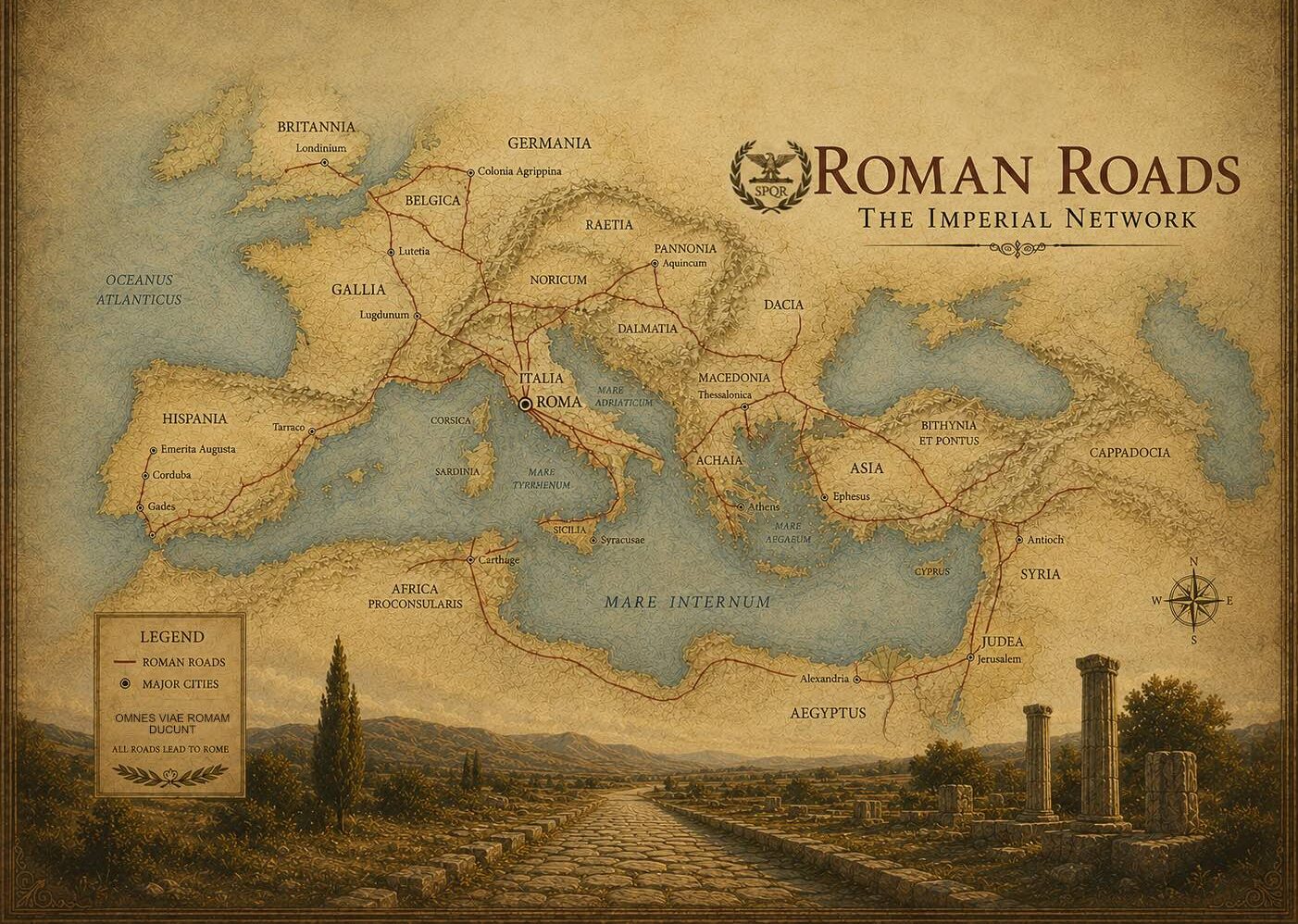
This organised road system allowed the Roman Empire to transfer military supplies efficiently across great distances, while also providing reliable transportation for imperial officials, government administrators, and official mail.
To allow freight carts and pack animals to travel more easily through mountainous regions, Roman engineers designed roads with moderate gradients and winding slopes that adapted to the natural landscape.
Roman Road Paving
Roman road paving followed a fixed and carefully planned method.
Construction usually included:
- levelling the route
- creating drainage systems
- building strong retaining walls
- and forming a stable foundation that could support travel throughout all seasons of the year
These methods helped create roads that were durable, convenient, and suitable for heavy transport.
The Roman Imperial Road
An imperial Roman road was a road paved according to Roman engineering standards and marked with milestones.
These roads were used for:
- imperial mail,
- military movement,
- and the transportation of Roman officials throughout the empire.